
My Reflection
Looking back, this course dramatically changed how I understand technology and the digital world. I went in thinking “digital” just meant modern electronics, but I now see a timeline stretching from ancient analog machines to Jacquard’s loom, Morse’s telegraph, Bell’s telephone, and finally to modern AI systems created by researchers like Hinton. I also developed a deeper appreciation for the human brain as an incredibly advanced analog system that continues to inspire digital algorithms.
One of my favorite parts of the course was the wide range of AI presentations from my classmates. Seeing how AI is used in accounting, graphic design, logistics, and even military technology helped me understand how deeply digitization affects every field. These presentations not only broadened my perspective but also showed me how the concepts we learned, neurons, perception, analog vs. digital, and the evolution of computing, connect to real-world problems and careers. This course didn’t just teach me history; it gave me a lens for understanding the digital revolution as a living, ongoing process that I’m now better prepared to navigate.
Defending My Digital Position
Through our exploration of historical communication tools, I formed a clearer position on the benefits and liabilities of digitization. When Samuel Morse digitized text into dots and dashes, society gained speed and reliability, but at the expense of expression. When Alexander Graham Bell introduced the analog telephone, the world regained emotional nuance and vocal identity. Later, as digital telephony and internet-based communication became dominant, we again traded warmth and subtlety for compression, convenience, and global reach.
My position, informed by neuroscience, engineering, and media studies, is that digitization maximizes efficiency but struggles to convey humanity. This idea became even clearer during the AI presentations on creative fields. While AI-generated art or automated accounting might be fast and accurate, they lack the contextual understanding, emotional intuition, and personal intent that humans naturally bring. Digitization is not inherently good or bad, it simply forces us to decide which qualities matter most.
Creative Process, Social Environment, and Visionaries in the Digital World
This course helped me see that the digital world grew from a long chain of creative problem-solving shaped by social needs. The journey began with the Jacquard loom, where punched cards automated weaving and introduced the idea of storing instructions in a physical medium. Then we looked at the telegraph, which emerged from the needs of a rapidly expanding industrial society. Samuel Morse and Alfred Vail responded to these demands by creating a new way to encode and transmit information across distance. Later, Alexander Graham Bell’s work with the deaf shaped his motivation to transmit the human voice, which gave rise to the telephone and a more natural form of communication.
As we moved forward in history, the pattern of creative breakthroughs continued. The invention of Hollywood’s film industry, driven partly by Thomas Edison’s aggressive patent control, showed how technological innovation, business interests, and cultural shifts intertwine. In modern times, the deep neural network developed by University of Toronto students demonstrated how curiosity, competition, and university research environments can spark technological revolutions. Class presentations on AI in accounting, graphic design, healthcare, and military applications made me realize how this legacy continues today. Innovation is never isolated; it is shaped by the social challenges of the moment, the available tools, and the determination of the people who envision a different future.
This excerpt was created with the help of ChatGPT
“Enhance this excerpt for my internet and digital revolution class” prompt. ChatGPT, 13 Feb. version, OpenAI, 24 Nov. 2025, chat.openai.com/chat.
Advantages and Limitations of Digital Representation
Studying technologies from Samuel Morse’s telegraph to today’s AI systems helped me understand what makes digital representation so powerful. Morse and Alfred Vail turned language into discrete electrical pulses, an early form of digital encoding that made long-distance communication faster and more reliable than anything that came before it. Later, Claude Shannon formalized how digital information could be transmitted efficiently and without error, laying the foundation for everything from the internet to smartphones.
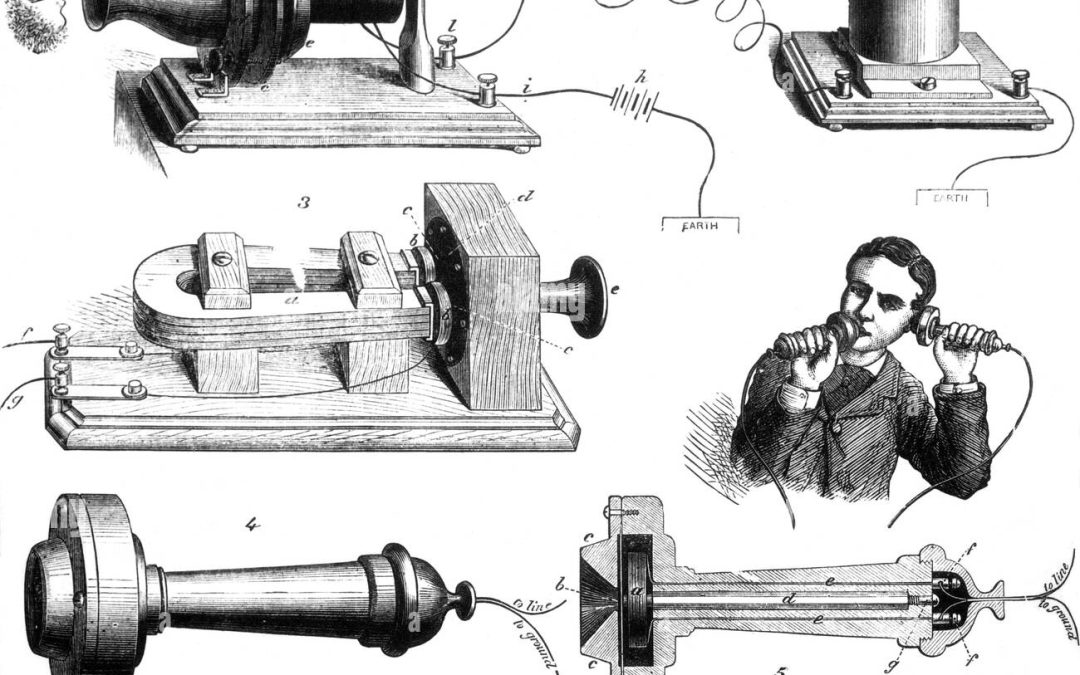
But throughout the course, I also learned the limitations of this approach. When we compared the analog richness of Alexander Graham Bell’s telephone, reproducing human voice waves, to the rigid binary of digital audio, I saw how clarity often comes at the cost of emotional nuance. Even artificial neural networks, inspired by the work of Warren McCulloch and Walter Pitts, simplify the brain’s messy analog complexity into manageable digital parameters. Through class discussions and the presentations on AI in the arts, medicine, and business, I recognized that digitization always means gaining speed, precision, and accessibility while giving up subtlety, texture, and human variation.
This blog was created with help from ChatGPT
“Enhance this encorporating more popular names from the digital revolution” prompt. ChatGPT, 13 Feb. version, OpenAI, 19 Nov. 2025, chat.openai.com/chat.
Interdisciplinary Digital Critique
This course taught me how important it is to evaluate digital technologies through multiple disciplinary lenses, especially as someone entering engineering and chemistry. When we compared biological neurons to artificial neural networks, I saw how drastically different digital reasoning is from real cognition. Biological neurons operate through chemical gradients, sensory input, and constant feedback from the environment, while artificial neurons are just mathematical functions updating through digital weights. This helped me understand why AI systems, despite their power, can also be unpredictable or limited, they imitate patterns, not understanding. The lessons on perception and how easily the human brain can be deceived made it clear that digital systems can be fooled just as easily, and sometimes much faster.
The historical technologies we studied reinforced the same point. The telegraph converted language into digital pulses, but it also removed all emotional context, showing how digitization always risks losing something important. The Jacquard loom demonstrated how programmable systems can automate work with incredible precision, but also how a single incorrect punched card could ruin an entire pattern. Seeing these early examples helped me think about my future in engineering and chemistry. If an AI model miscalculates a stress distribution in a material, suggests the wrong reaction pathway, or predicts an unsafe compound, the consequences could extend far beyond a simple digital error. Bridges, reactors, pharmaceuticals are domains where mistakes can physically fail, harm people, or damage the environment. Understanding the history and limits of digital systems makes me more aware of the caution required when using AI in scientific or engineering decision-making.
Digital objects vs. Natural counterparts
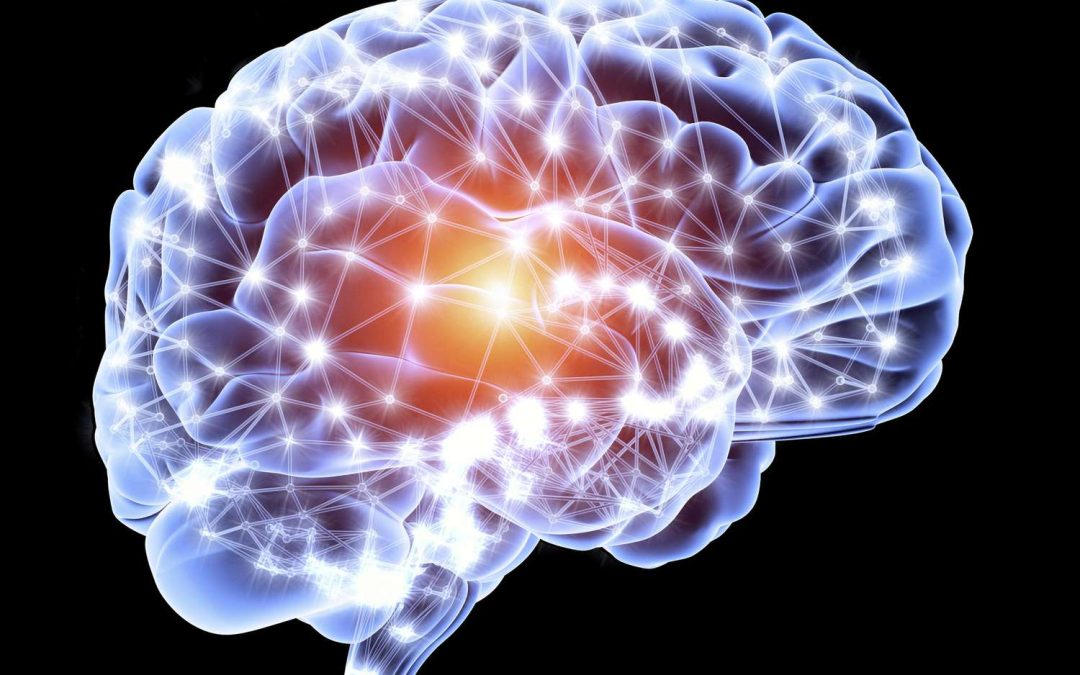
This learning objective became clear to me when we studied the human brain’s analog structure, particularly from Stephen Fry’s podcast, where he thoroughly explained the groundwork of neurons. Biological neurons operate in a continuous, chemical world full of gradients, emotions, and noise. When we compared this to the digital “neurons” created by Hinton and others, the difference was striking. Artificial neural networks break experience into neat numeric weights and activations, capturing patterns but losing the lived qualities of real perception.
This same contrast appeared when we studied the Antikythera mechanism, an ancient analog computer built by Greek engineers whose names are unknown but whose ingenuity was unmistakable. Its gears encoded astronomical knowledge in a smooth, continuous form that no digital simulation fully reproduces. What we gain through digitization, like the ability to share a 3D model online, is balanced by what we lose: the physicality, craftsmanship, and contextual meaning of the original object. Seeing classmates present on digital art tools and AI-generated design reminded me how digital versions enhance creativity but can also disconnect us from the deeper human elements behind objects and ideas.
Digitization as sound
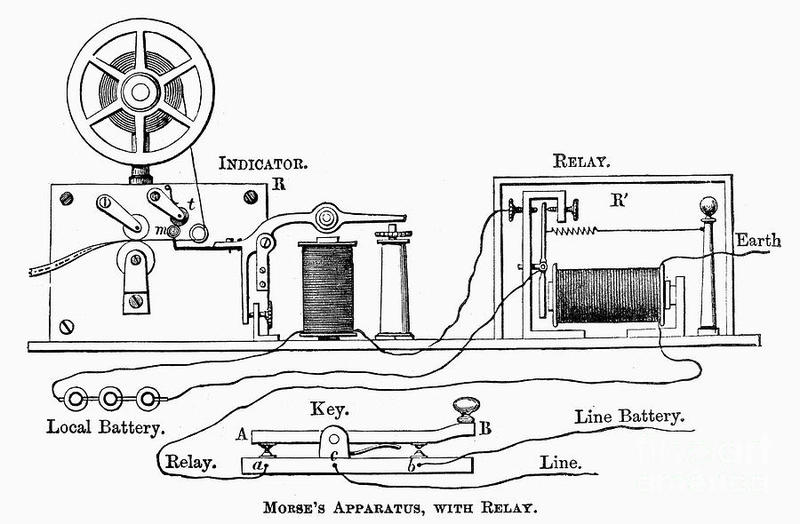
In the late 1800s, long-distance communication depended on the telegraph, a system that converted written language into a sequence of electrical pulses. These pulses, short and long signals representing dots and dashes, were an early form of digital communication because they broke text into discrete units. Instead of sending the shape or sound of words, the telegraph reduced language to a code that either was or was not present on the wire. This allowed messages to travel far distances but created major constraints: every message needed a trained operator at both ends, and only one transmission could move along a line at a time.
Alexander Graham Bell, a scientist and teacher of the deaf, imagined something more fluid and human. He believed that if the vibrations of the human voice could be transformed into electrical variations and then reconstructed as sound, communication would feel more immediate and personal. After years of experimenting with membranes, magnets, and coils, Bell and his assistant Thomas Watson succeeded in March of 1876, when Bell spoke his famous request for Watson to come help him, and Watson heard the words clearly through the wire. Unlike the telegraph’s discrete on-off pulses, Bell’s telephone transmitted analog electrical waves that continuously mirrored the shape of spoken sound. This shift made communication faster, more expressive, and more natural, because people were finally able to hear each other’s voices rather than receive coded text.
The contrast between the telegraph and the telephone mirrors the larger concept of digitization at the heart of today’s digital revolution. The telegraph was an early demonstration of digitization because it took something messy and continuous and fragmented it into standardized, countable units that could be easily transmitted. The telephone moved in the opposite direction, turning the richness of sound into flowing analog waves. Later technologies combined these ideas, transforming sound itself into digital streams of 1s and 0s. This offered clearer, faster, and more reliable transmission, but sometimes at the cost of the warmth and subtlety found in natural analog signals.
Bell’s invention and the technologies that came after it highlight a central tradeoff of digitization: converting the real world into digital form brings precision, speed, and efficiency, but it may also strip away certain human qualities that are harder to quantify. The story of the telegraph and telephone shows how every technological leap involves decisions about what to preserve, what to compress, and what to sacrifice in the name of progress.
This was written with the help of ChatGPT.
“Expand on themes from the telegraph and telephone for this excerpt” prompt. ChatGPT, 13 Feb. version, OpenAI, 15 Oct. 2025, chat.openai.com/chat.
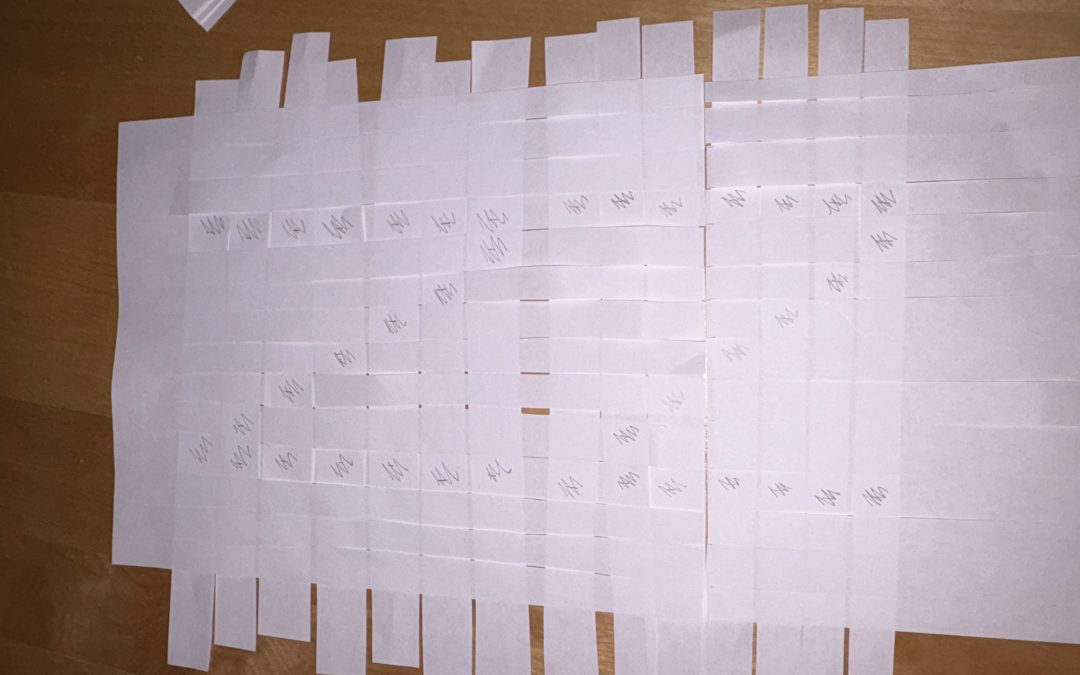
How to weave you initials
The loom, one of humanity’s earliest tools for making cloth, was invented thousands of years ago to interlace threads into strong, patterned fabrics. At its core, weaving is the process of crossing one set of strands (the weft) over and under another set of parallel strands (the warp) to build a surface. Even in its simplest form with paper, weaving teaches the basic principle of creating patterns by alternating what is shown and what is hidden, a foundation that grew into complex textile traditions across cultures.
In the pictures below, I show my own weaving project where I cut a sheet of paper into vertical slivers, leaving a margin at the top so the base would hold together. I then took other strips of paper and wove them across, going under the vertical slivers when I wanted that space blank, and going over them when I wanted a strip to show. This allowed me to create my initials “NN” vertically with a space in between. In a way, this is like digital logic: you either show the strip (on/1) or you don’t (off/0). Looking back, I realized that using different colors of paper for the initials and the background would have made the letters stand out more clearly.
Digital vs. Analog
This story was generated with the help of ChatGPT
“create me a story that would explain to a child the process of digital vs. analog” prompt. ChatGPT, 13 Feb. version, OpenAI, 16 Sep. 2025, chat.openai.com/chat.
DEMO
this is my first post